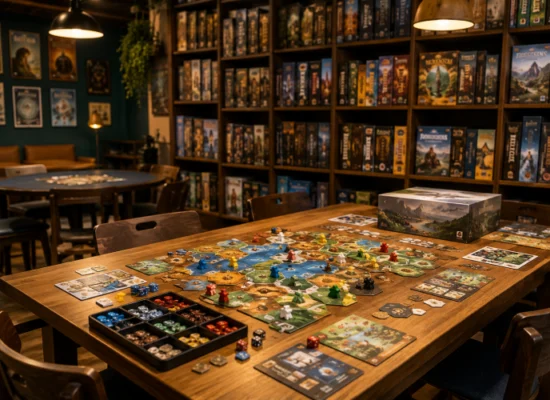
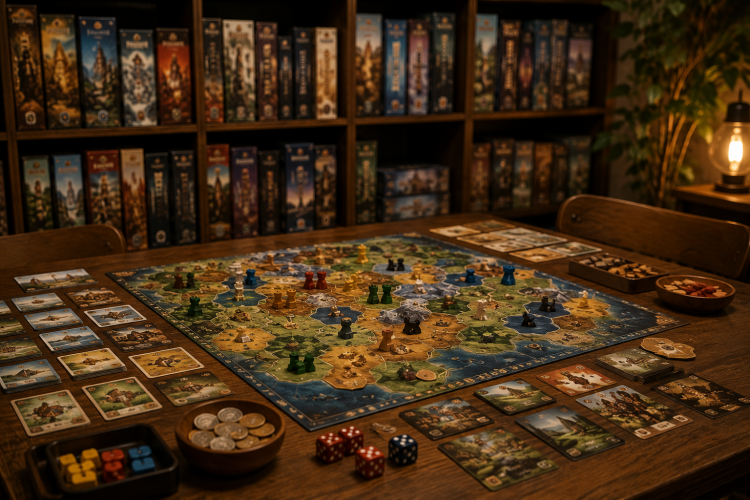
Choosing a board game is not always as simple as selecting the most popular title on the shelf. A game that works well for one group may feel too slow, too complicated, or too competitive for another.
The best choice depends on the number of players, available time, experience level, preferred interaction style, and the atmosphere the group wants to create. By considering these factors before starting, players can avoid frustration and enjoy a more satisfying session.
Start With the Number of Players
Every board game is designed for a specific player range, but the recommended number on the box does not always indicate the ideal experience.
Some games technically support two to six players but may work best with four. Others become slower as more participants are added.
Before choosing a title, consider:
- How many people will play
- Whether anyone may arrive late
- Whether the game supports teams
- Whether eliminated players must wait
- Whether the group may split into smaller tables
For larger gatherings, party games and team-based games are often easier to manage. Smaller groups may prefer strategy, cooperative, or narrative games that allow more individual participation.
Consider the Available Time
A game should fit the time the group actually has, not the time everyone hopes to have.
The stated playing time on the box may not include:
- Explaining the rules
- Setting up the components
- Helping new players
- Taking breaks
- Cleaning up afterward
A game listed as 60 minutes may take much longer during the first session. When time is limited, choose a shorter game with simple setup and clear rules.
It is also useful to ask whether the group wants one long session or several shorter games. Some players enjoy spending an entire evening on one strategic title, while others prefer variety.
Match the Game to the Experience Level
A group with mixed experience levels needs a game that is easy to explain but still interesting for regular players.
Beginner-friendly games usually include:
- Clear objectives
- Limited actions per turn
- Short rule explanations
- Visible progress
- Moderate playing time
- Few exceptions to the main rules
More experienced groups may enjoy games with deeper strategy, asymmetric roles, resource management, or longer campaigns.
Complexity does not automatically make a game better. A well-matched simple game is usually more enjoyable than a highly rated title that overwhelms half the table.
Decide Between Competitive and Cooperative Play
The way players interact has a major effect on the atmosphere.
Competitive games place participants against one another. These may involve racing, trading, negotiation, direct conflict, or scoring points more efficiently than opponents.
Cooperative games ask everyone to work toward a shared objective. Players may solve problems, manage threats, or complete missions together.
Cooperative games can be useful when:
- The group includes beginners
- Players prefer teamwork
- Direct competition creates tension
- Children and adults are playing together
- The group wants a shared challenge
Competitive games may be better for groups that enjoy rivalry, tactical decisions, and comparing strategies.
Some games combine both approaches by including teams, hidden roles, or temporary alliances.
Think About Player Interaction
Not all board games involve the same level of communication.
Some games require constant negotiation and conversation. Others allow players to focus mainly on their own boards or resources.
Common interaction styles include:
- Trading
- Bluffing
- Voting
- Team discussion
- Direct attacks
- Shared planning
- Limited communication
- Independent strategy
A highly social group may enjoy games that encourage discussion, humor, and unpredictable decisions. A quieter group may prefer puzzles, card drafting, or strategic planning with less direct confrontation.
Understanding the group’s personality is often more important than choosing the newest release.
Choose a Theme the Group Can Understand
Theme helps players connect with a game and understand its objectives.
Popular themes include:
- Fantasy
- Science fiction
- History
- Exploration
- Mystery
- Farming
- City building
- Business
- Nature
- Adventure
A strong theme can make complex rules easier to remember because the actions feel connected to the setting.
However, theme should not replace good gameplay. Some players care deeply about the story and artwork, while others focus mainly on mechanics and strategy.
When introducing a new group to board games, familiar themes may make the experience more approachable.
Review the Setup and Table Space
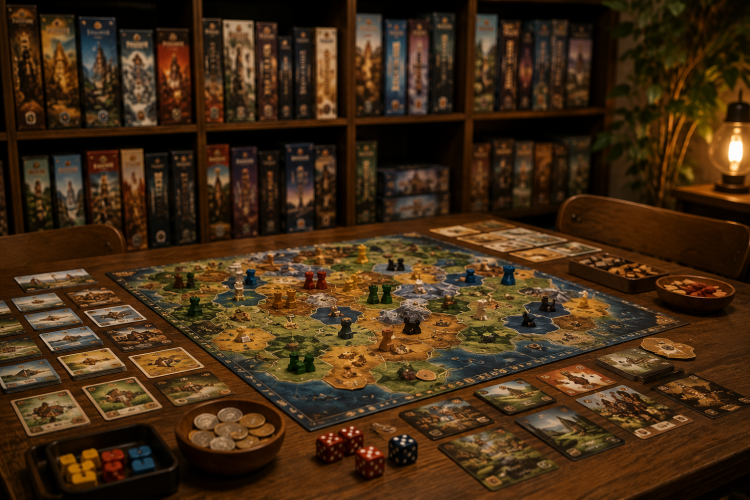
Some games require only a deck of cards and a small playing area. Others include large boards, individual player mats, miniatures, tokens, and several decks.
Before selecting a game, check:
- Table size
- Number of components
- Setup time
- Storage space
- Lighting conditions
- Whether drinks or food will be nearby
A large game may be difficult to manage on a small café table. Games with many small components may also be unsuitable in crowded or poorly lit spaces.
For casual events, compact games with simple setup are often more practical.
Avoid Elimination in Longer Games
Player elimination means that someone can lose early and remain outside the game while others continue.
This can work in short games, but it may create a poor experience during longer sessions.
When playing with beginners or new club visitors, choose games that keep everyone involved until the end. Alternatives include:
- Point-based scoring
- Shared loss conditions
- Catch-up mechanisms
- Limited penalties
- Simultaneous turns
- Ongoing team participation
Keeping all players active helps maintain energy and makes the session feel more inclusive.
Ask the Group What They Want
The person choosing the game should not assume that everyone wants the same experience.
A few simple questions can make the decision easier:
- Do you want something competitive or cooperative?
- How much time do we have?
- Do you prefer strategy or humor?
- Are you comfortable learning detailed rules?
- Would you like one long game or several short ones?
- Do you want direct conflict or a calmer experience?
When several options are available, present two or three suitable choices rather than asking the group to select from an entire library.
This reduces decision fatigue and helps the session begin more quickly.
Use a Simple Selection Process
A practical selection process can follow these steps:
- Confirm the number of players.
- Set a realistic time limit.
- Identify the least experienced participant.
- Choose the preferred interaction style.
- Check the table space and setup requirements.
- Present two or three appropriate games.
- Explain the basic objective before making the final choice.
This method works well in clubs, family gatherings, cafés, and private game nights.
Prepare Before Teaching the Game
Selecting the right game is only part of the process. A poor explanation can make even a good title feel confusing.
Before the session:
- Review the rulebook.
- Set up the game in advance when possible.
- Prepare a short explanation of the objective.
- Teach the most important actions first.
- Avoid explaining every rare exception immediately.
- Use a sample turn.
- Answer questions as they arise.
Players usually understand a game more easily when they can see the components and follow a practical example.
Keep a Record of Group Preferences
Groups that meet regularly can save time by recording which games worked well.
Useful notes may include:
- Preferred player count
- Actual playing time
- Difficulty level
- Best audience
- Common rule mistakes
- Whether the group would play again
A simple list helps organizers recommend suitable titles during future sessions.
It also prevents the group from repeatedly choosing games that do not match its preferences.
Frequently Asked Questions
What is the best board game for beginners?
There is no single best game. Look for clear rules, moderate playing time, limited downtime, and an objective that is easy to understand.
Should new players start with cooperative games?
Cooperative games can be useful because experienced players can guide the group. However, one person should not control every decision. All players should remain involved.
How long should a first game session last?
A game lasting approximately 30 to 60 minutes is often manageable for beginners, excluding the rule explanation and setup.
Are highly rated games always a good choice?
No. Ratings do not account for the preferences, experience level, and available time of a specific group.
How many games should be offered to a group?
Two or three suitable choices are usually enough. Offering too many options can delay the session.
Final Thoughts
The right board game is the one that fits the people at the table.
Player count, available time, experience level, interaction style, theme, and physical space all influence whether a session will be enjoyable. A popular or complex title may not be the best option if it does not match the group.
By asking a few questions and narrowing the choices before playing, organizers can create smoother, more inclusive, and more memorable board game sessions.
Meta Description: Learn how to choose the right board game for any group by comparing player count, playing time, difficulty, interaction style, theme, and table space.